Traditions
Local Legends and Bell Inscriptions: How to Document Oral Traditions Around a Campanile
A bell tower keeps two records. One is cast in bronze and cut into stone: the founder's name, a date over the door, a verse running along the bell's shoulder in letters that were meant to be read from the square below. The other record is in people's heads — who rang for the hail, whose grandmother climbed the stairs at dawn, why nobody rings the fourth bell any more. The first record is easy to photograph. The second disappears quietly, one funeral at a time. This is a method for catching it while it is still being told.
Start with the bronze, not the microphone
Before you interview anyone, document the object. A good conversation about a bell starts with knowing what is actually written on it, because the inscription gives you the questions nobody thinks to ask.
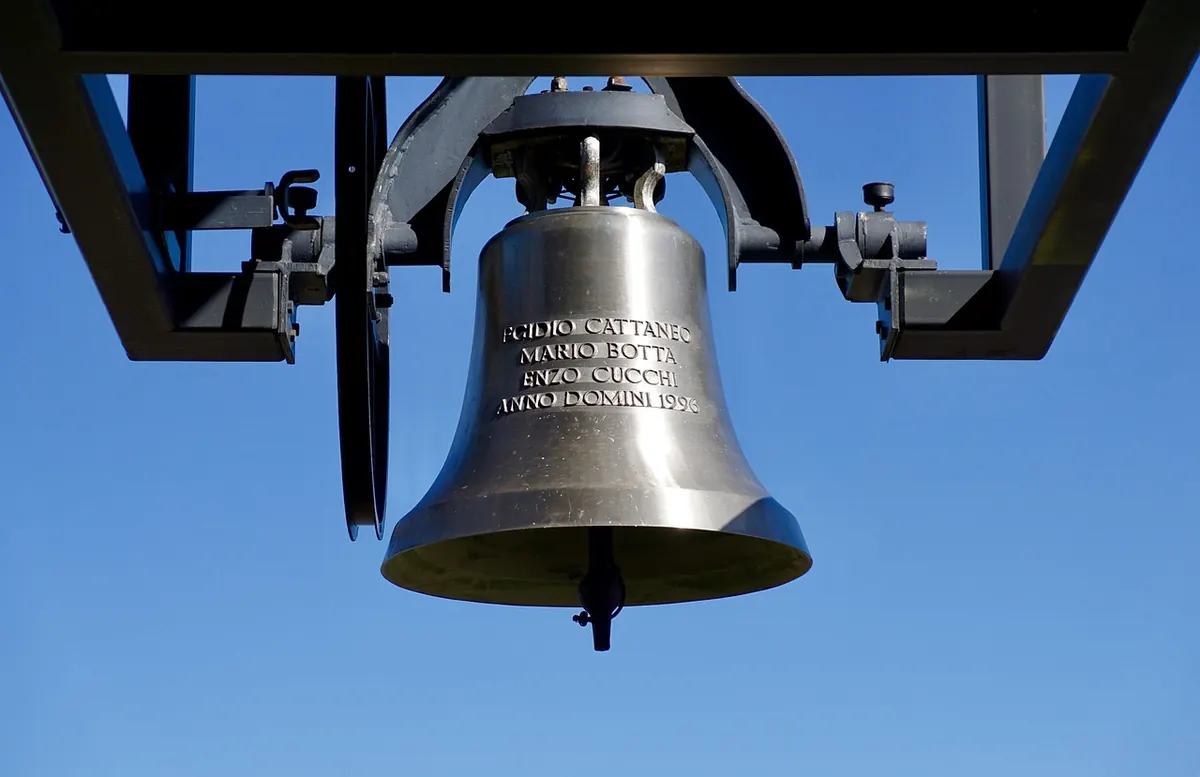
Photograph the inscription bands properly. Overcast light is better than sun, and raking light — a torch held almost parallel to the surface — pulls half-worn letters out of the metal. Take one frame with a ruler or a coin for scale, and take three or four of each band, shifting slightly, because the best letter in one frame is often a shadow in the next. Resist the urge to make rubbings on old bells or worn stone; the pressure and the graphite do more harm than the photograph is worth.
Then transcribe what you see, in capitals, exactly as cut, keeping the abbreviations. Bell inscriptions are full of them: FECIT for "made it", ANNO DNI for the year of the Lord, a line of Latin verse that runs around the whole crown. Write [?] where a letter is uncertain rather than guessing. You will want that honest gap later, when a villager tells you something that suddenly makes the missing word obvious.
Find the people who still know, and ask properly
Start with the parish office or the sacristan; they usually know who holds the keys, literally and otherwise. From there the trail tends to run through the person who rings for funerals, the secretary of whatever confraternity still keeps a list, the cemetery caretaker, and the oldest member of a family that has lived within sight of the tower for four generations. Ask each one the same closing question: who else should I talk to? Names accumulate faster than you expect.
Explain what you are doing in one sentence, and say where the recording will end up. Bring a printed photograph of the bell. It changes the room. People who have stopped believing that anyone cares about the old bell will lean over the picture and start talking before you have opened your notebook.
The three-pass interview
One conversation can do the work of three if you handle it in passes, and the order matters more than the questions.
- Let them talk. Open with something wide: "Tell me about the tower when you were a child." Then keep quiet. Take no notes for the first few minutes, or only a word, because a pen coming down on the page tells a storyteller that they have said something wrong. This pass gives you the shape of the story and the words they use for things.
- Go back over the details. Now ask the small, dull, specific questions that make a story checkable: which year, which bell, which side of the square, who else was there, what the rope was made of, what the priest said afterwards. This is where you learn that the "big bell" in one account is the third bell to another speaker.
- Read the inscription aloud. Save this for last. Show the photograph, read the Latin or the dialect line slowly, and ask what they were told it means. The answer is often a family translation that has drifted generations away from the original — and that drift is the most valuable thing in the room.
Questions worth keeping in the pocket
- What did the bell sound like from your house, and what did each different ring mean?
- Who was allowed to ring it, and who was not?
- Was there a bell that was silent, broken, or taken away? Where did it go?
- What were you told the letters on it said?
- Did anything ever happen to the tower itself — lightning, war, repairs, scaffolding?
A notebook page that still makes sense in ten years
Memory is generous for an hour and merciless for a year. The page you write must be readable by someone who was not there, including you.
Rule a vertical line down the middle of the page. On the left, write what you observed — the date, the room, who was present, the photograph numbers. On the right, what was said. Keep verbatim speech inside quotation marks and paraphrase outside them, and mark anything you are not sure you heard with a squiggle in the margin. Note the time every ten minutes or so; when you later work from an audio file, a timestamp turns a two-hour search into a thirty-second one.
Mark uncertainty honestly. "Said" means the words were spoken. "Says" is the same thing in the speaker's present tense, which is how most people tell a story they have told many times. A sentence beginning "I think" is a different kind of evidence, and worth recording as such. And write down the things that go unsaid: the pause before a name, the phrase someone corrects mid-sentence.
Let the inscription do the asking
Most inscriptions fall into a few families, and knowing which one you are holding tells you what to ask. Votive lines and psalm fragments invite questions about feast days and processions. Founder's signatures and dates invite questions about who paid, and why. Lines of verse — Vox ego sum vitae, "I am the voice of life", is one of the old standards — invite the folk translation. Names of donors invite the family history.
Careful with the Latin. Unless you read it comfortably, do not correct the person in front of you. Note the reading you were given, then send a photograph to someone who does read it, and put both versions in the record. The scholarly translation and the grandmother's translation are not rivals; they are two different documents.
Likewise, resist tidying the story. If two people give you different dates for the same flood, keep both accounts side by side and note who told each one. Contradiction is information — it usually points at something the community has argued about for a century.
Filing it so it outlives the afternoon
End the work the same day, while the room is still fresh. Label the audio file with the date, the speaker's name and the tower; save the photographs with the same prefix so the inscription and the interview never drift apart. Type up the parts you quoted, not the whole conversation, and keep the notebook page scanned alongside them.
Write one plain page of summary: what the tower is, what the inscription says, who told you what, and where the gaps are. Give a copy to the person who spoke with you, and ask before anything is published or passed to a local archive. The story belongs to the teller first. Then deposit a set with the parish, the nearest historical archive or the local library, and tell the people who helped you where it went. A recording nobody can find is only a slightly slower way of losing the story.
Photo: suju-foto / Pixabay
Related Articles