Traditions
Seasonal Bell Tower Traditions: A Yearly Calendar for Heritage Visitors
Bell towers are calendars you can hear. In many Italian towns, the campanile still marks the Angelus at noon, calls people to Mass, tolls for a funeral, and breaks into a long peal when the patron saint’s day arrives. For a heritage visitor, these sounds are not background colour; they are clues to when a town will be at its most alive, and when it will want quiet. The useful skill is knowing which recurring customs to plan around — and how to attend without turning a religious occasion into a photo opportunity. What follows is a seasonal map, not a fixed timetable. Dates vary by parish and village, so always confirm locally.
Start with Three Calendars, Not One
A single town may run on three overlapping calendars: the liturgical year, the patronal calendar, and the civic or agricultural year. They often meet in the same square, but they do not always agree. The feast of the town’s patron saint may be a solemn religious date, a long weekend of processions and fireworks, or both. In a hill town, the festa patronale might begin with a Friday evening Mass, continue with a Saturday procession, and end with a Sunday concert. The religious date and the civic weekend are not always the same.
Before you book, identify the anchors:
- Liturgical high points: Christmas, Easter, Pentecost, the Assumption on 15 August, and All Saints on 1 November.
- The patronal feast: usually the town’s principal saint. Check the parish bulletin, the sacristy noticeboard, or the comune events page.
- Civic and agricultural fairs: harvest festivals, palii, and village suppers often include a Mass, a procession, and a bell peal.
Ask two questions at the tourist office or parish: “Quando è la festa patronale?” and “Ci sono funzioni religiose?” That second question matters. A street party may be open to all; a Mass is not a performance.
Winter: Epiphany, Carnival, and the Long Lent
Winter is a good season for tower-spotting, but a poor season for assumptions. On 6 January, Epiphany services often end with a peal and, in some places, a blessing of homes. Around 17 January, the feast of St Anthony Abbot brings rural parishes together for bonfires and the blessing of animals. Carnival follows, with its own local rhythms; bells may ring for evening gatherings or mark the start of Lent.
Then comes Ash Wednesday and a quieter stretch. In many parishes, the most striking winter custom is not noise but restraint: bells may be muffled, or limited to the call to Mass, as the community moves through Lent. If you are visiting for the architecture, check tower-opening hours first. Many towers close in winter or open only for booked groups, and stone stairs are cold and uneven.
Holy Week and Easter: Silence, Then the Gloria
Holy Week is the most dramatic moment in the bell tower’s year. In many places, the bells fall silent after the Mass of the Lord’s Supper on Holy Thursday and stay silent through Good Friday and Holy Saturday. Then, during the Easter Vigil, they ring again at the Gloria — sometimes all the bells at once, sometimes joined by towers across the valley. Easter Sunday brings processions, family gatherings, and a town that feels newly unlocked.
This is not the week to schedule a casual tower climb. Churches are full, streets are busy, and the people ringing the bells are usually volunteers with a job to do. If you want to hear the Easter peal, ask the parish for the Vigil time, arrive early, and stand outside with the congregation rather than in a doorway. Keep children close; the sound is thrilling, but it is also very loud.
Late Spring and Summer: Patron Saints, Processions, and Fireworks
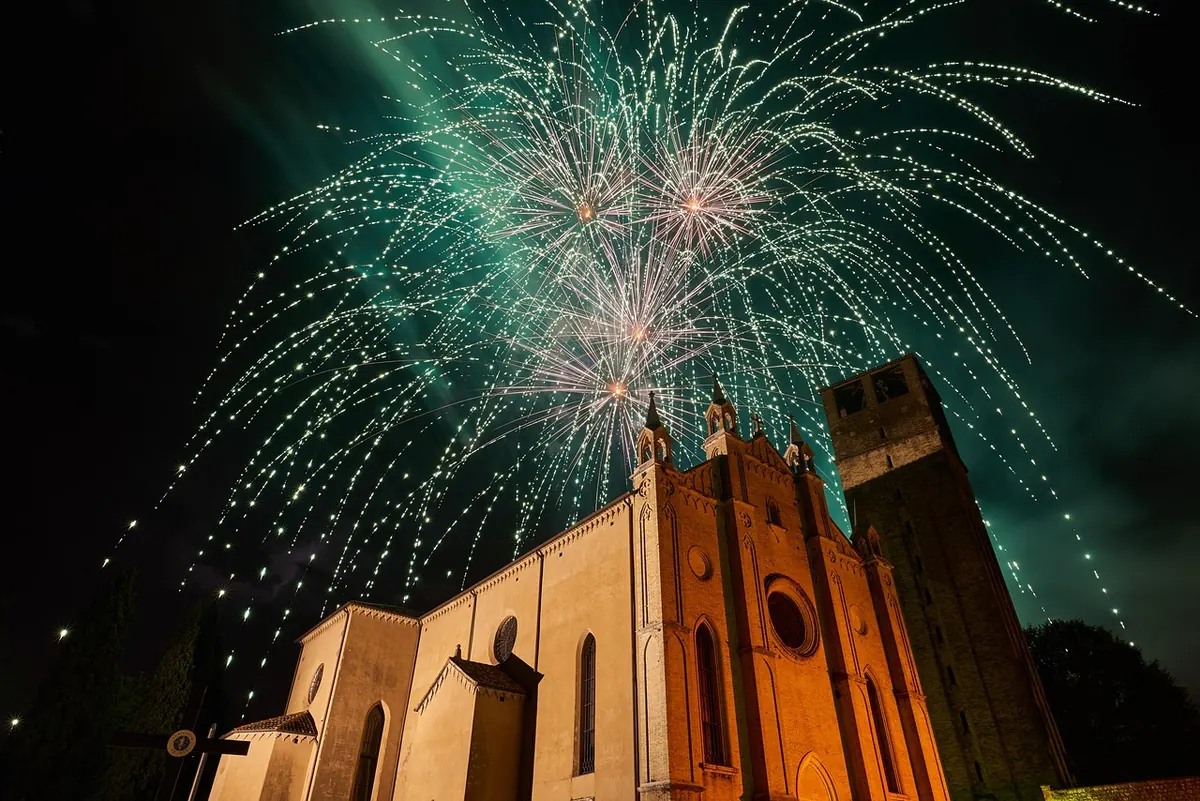
From late spring, the calendar thickens. Corpus Christi processions wind through decorated streets. St John the Baptist on 24 June and Sts Peter and Paul on 29 June are patronal feasts in many towns, often marked by bonfires, street suppers, and long evening peals. August brings the Assumption on 15 August, the heart of Ferragosto, when villages celebrate with processions, food stalls, and fireworks.
Summer festivals are wonderful for visitors, but they ask for spatial awareness. Processions often use narrow streets with no pavement. A brass band may follow the statue, and a group of children may carry candles. Keep to the side, do not cross in front of the procession, and follow the marshals. If you want to photograph, ask first when faces are recognizable, and never use a flash in church.
A Word on Processions
Treat a procession as a moving church service. Remove hats, lower your voice, and avoid eating or drinking in the middle of it. Do not touch the statue, the canopy, or the ropes. If a collection is taken, give what you can or simply step back. These small courtesies matter more than any perfect camera angle.
Autumn: Harvest, Remembrance, and the Return of Routine
September and October bring harvest fairs, wine festivals, and patronal feasts in smaller villages. The mood is often local rather than tourist-facing: a Mass, a lunch, a tombola, and a bell peal that carries across the fields. This is a good time to ask about tower visits, because volunteers are often around and the summer crowds have gone.
November changes the tone. All Saints on 1 November and All Souls on 2 November are days of remembrance. Bells may toll slowly, and cemeteries are busy with families. If you are visiting a village on these days, give space. Do not photograph mourners or graves without clear permission, and do not treat a funeral toll as an event to chase. A quiet pause is the right response.
Christmas and New Year: Advent to Epiphany
Advent is short on spectacle and long on preparation. The Immaculate Conception on 8 December often marks the start of Christmas markets and church decorations. Christmas Eve brings midnight Mass, or an earlier evening Mass in many parishes, followed by a joyful peal. New Year’s Eve is louder: bells at midnight, fireworks, and a town square full of people who all seem to know each other.
Check service times a day or two ahead, especially at Christmas. Tower tours may be suspended, and the people who normally open the tower may be busy with the liturgy. If you are in a village for the holidays, remember that the church is not a warm shelter or a concert venue; it is someone’s place of worship. Dress for the weather, arrive early, and leave quietly if you must.
A Practical Closing: Listen, Ask, and Leave Room
You do not need a special pass to enjoy a bell tower’s year, but you do need a little patience. The best visits are built around confirmed local information and a willingness to step back. Use this checklist before you go:
- Confirm times with the parish, the comune, or the tourist office; local festival dates move more often than guidebooks admit.
- Ask before entering a tower. Many are open only for guided visits, and not all are suitable for young children or visitors with limited mobility.
- Dress for a church: cover shoulders and knees, remove hats, and keep voices low.
- Stay out of roped areas and off processional routes; follow marshals and volunteers.
- Ask before photographing people. No flash during services, and check local rules before flying a drone.
- Never touch ropes, bells, or statues. Bell machinery is loud and can be dangerous.
- If a funeral toll sounds, pause and give way. It is not part of the visitor itinerary.
- Support local cafés and shops, but not during Mass or a procession.
Plan around the sound rather than the crowd. A town’s bell tower will tell you when it is ready for company — and when it is simply marking time for the people who live there.
Photo: Samuel_Busetto / Pixabay
Related Articles